Climate change is among the most serious issues we face today. The science is clear: the toll we have taken on our planet is approaching irreversibility, and its impacts will be notable. While these effects cannot be entirely eliminated –some of which are already happening– we still have the opportunity to mitigate them through appropriate action.
Our societal shifts to more earth-friendly practices will come at a cost, but it’s clear that the damages we risk through in-action are far greater. National governments have recognized this urgency, which is one of the reasons why there is a push for mass electric vehicle (EV) adoption.
In the U.S. alone, we have seen federal and state administrations prioritize the shift from gas to EV. For instance, President Biden has set the ambitious target of 50 percent of EV sale shares by 2030. States like California even plan to phase out new internal combustion engine vehicles entirely by 2035.
Despite these aspirations (and the rapidly approaching deadline), all-electric vehicles make up less than 1 percent of cars on the road. That leaves the automotive industry with the trillion-dollar question, “How can we move the needle?”
The road to mass EV adoption will not be easy. We’re seeing the “bumps in the road” debated as we speak: concerns over infrastructure, range anxiety, and whether electric vehicles are truly the answer to our climate problems.
I’m of the belief that knowledge is our path forward. If we are to reach mass adoption, the blockades need to be better understood – not only by the administrations who set these goals but also by the manufacturers who produce the cars and the consumers who ultimately decide whether they sell.
Environment
Electric vehicles’ environmental benefits are still heavily debated. After all, they use a finite material just like their fuel counterparts. It’s true that mining these rare earth metals has environmental impacts, along with the embodied emissions in creating batteries.
However, new research within the last year shows that EVs are unambiguously better for the environment, even accounting for the supply chains. Along with this, the biggest draw to EVs is the elimination of harmful tailpipes, which are responsible for killing thousands of people every year. Science has shown that a decrease in air pollution would result in reduced hospitalizations and an overall healthier population.
But whether EVs are better for the environment is only one hurdle. The overwhelming majority of car shoppers do not purchase vehicles based on these facts alone, and these facts don’t compensate for the next hurdle: infrastructure.
Infrastructure
Beyond its environmental impact, it must also be considered whether electric cars are both practical and safe as a long-term solution. Many experts are concerned that our current infrastructures are unable to handle mass EV adoption.
Last year, Texas saw the worst grid failure in the state’s history. This wasn’t just limited to Texas, either. According to Reuter’s examination of federal data, the number of power outages over the last six years has more than doubled those in the previous six years.
Some states have already experimented with rolling blackouts to conserve energy, too. If we were to increase the number of electric vehicles on the road, especially in as rapid of a timeline as 2030, it would add pressure to the nation’s grid in two ways. It would not only spark a surge in the power demand, but it would also increase our dependence on renewable energy, which could pose problems on days with less sun or wind.
A solution to this would be expanding and modernizing our nation’s grid system, but that too comes with its own set of challenges. Although the federal government is the driving force in pushing mass EV adoption, they lack the authority to expand the grid.
As Reuters reports, “Paying for major grid updates would require regulators to sign off on rate increases likely to spark strong opposition from consumers and local and state politicians, who are keen to keep utility bills low.”
Ultimately, the conflicting interests make it even more difficult to coordinate any meaningful plans to modernize the grid.
Consumers
Should these issues be resolved, it would still not be enough to drive people to purchase EVs. In fact, most car shoppers buy off familiarity: whether that’s with a particular brand and nameplate or through talking with a current owner of the car they’re considering.
Manufacturers can use this to their advantage by releasing EV models of a staple nameplate, as we’ve seen with models like the Ford F-150 Lighting.
The truth of that matter is that if we are to electrify our roads, we need to be addressing the concerns of the consumers. Many drivers do not consider emissions but will consider the amount of money they are spending. A lower monthly bill and little-to-no maintenance are attractive features to many shoppers.
A concern we hear at United Nissan from many drivers about EVs is range anxiety. They are worried that they will be stuck in a scenario with no charging stations in sight and a near-dying battery. In practice, this is not as large an issue, considering most commuters travel an average of 30 miles a day. This is a concern, however, when it comes to longer trips – which is a huge factor in buying decisions.
The automotive industry is slowly overcoming this through added charging stations and longer-range batteries. New models like the 2023 Nissan Ariya or Toyota bZ4x can go 300+ miles on one charge.
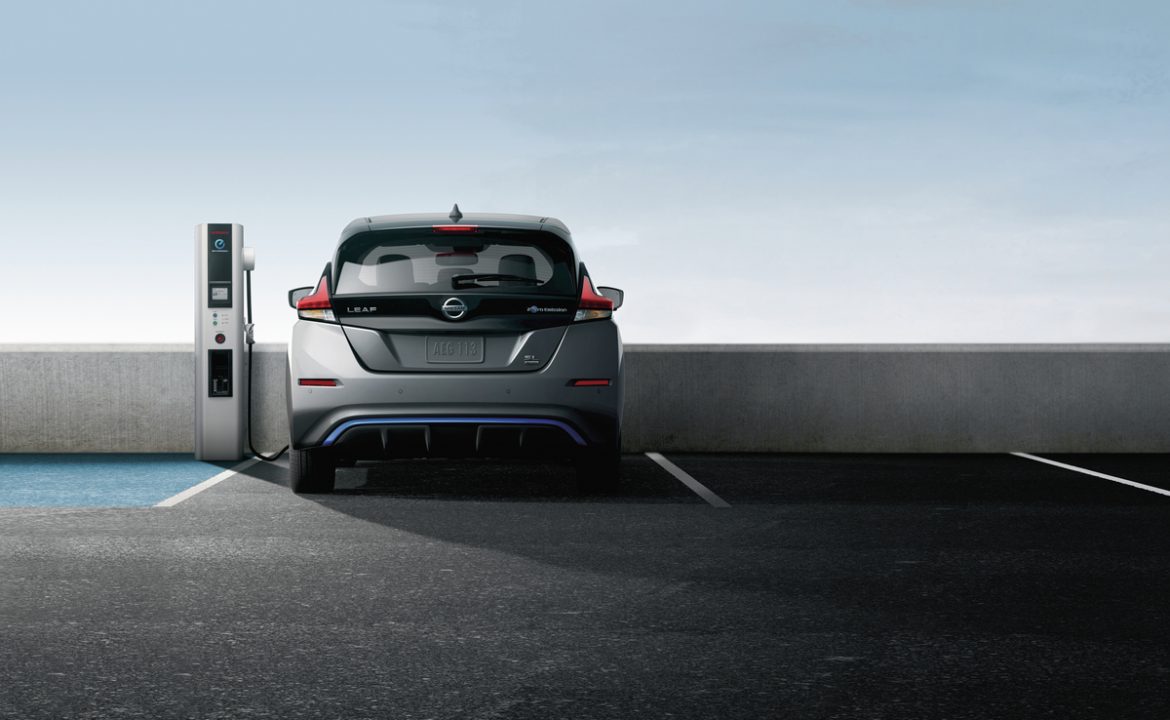
But the time investment remains a hurdle here. Normal charging stations can take 5 to 10 hours to fully recharge a long-range vehicle. If you’ve ever seen a Costco gas line, you know this is not an ideal scenario.
Within the last few years, we’ve seen attempts to reduce wait times through options like DC fast charging. These stations draw a higher voltage and fill up the battery much quicker. The Kia EV6, for instance, can gain 200 miles in less than 20 minutes with fast charging. Can it compete with the time it takes to refuel? No, but it allows the driver to grab a cup of coffee and come back to a near-fully charged vehicle.
For and against, the transition from combustion engine vehicles to electric vehicles appears inevitable either way. Whether we accelerate at the rate we have set out though, remains uncertain. At every level, whether that be in regard to infrastructure, manufacturing, or selling, there are bumps in the road that need addressing. If we are to reach our goals, it is the responsibility of all involved – dealers, government agencies, car shoppers, and manufacturers – to understand what is at stake as we drive towards a cleaner future. In general, leading with an open mind is bound to set us on the right path.