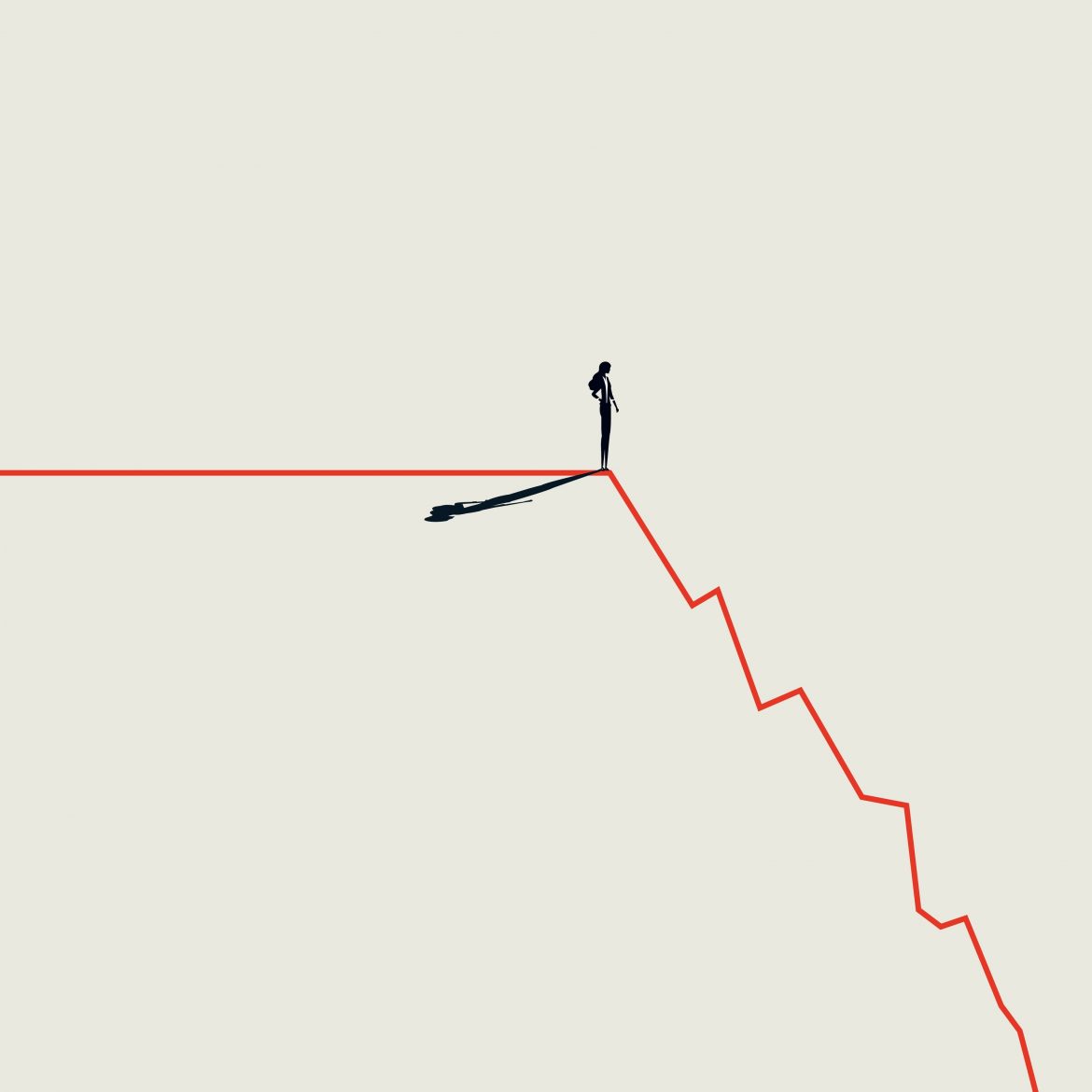
The basic question on everyone’s mind right now, “Are we in a recession?”
Depending on where you look, you’ll get different answers. Inflation, gas prices, and supply shortages all paint an unfavorable picture, yet, at the same time, the unemployment rate has hit some of its lowest levels in history.
While the broader picture looks bleak, some Americans have found a silver lining to a post-pandemic economy. Stimulus checks and lockdown orders allowed Americans to save an extra $4.2 trillion of readily available cash, and 50 percent of those who switched jobs during the Great Resignation now earn more money as a result – one-third of those earning 30 percent more or greater.
But with the Consumer Price Index also reaching a whopping 9.1 percent in June, its largest rise since 1981, does the increase in people’s pay make up for the rising cost of goods?
The disparity between these statistics has left many feeling confused, to say the least. Officials have argued whether our economy meets the requirements needed to declare a “recession,” but most Americans have already made up their minds.
According to a recent CNN poll, 64 percent of Americans believe we are in a recession. Even more telling, only 18 percent think the nation’s economy is in good shape.
Suffice it to say, the looming recession talks have left many worried about their finances. If this applies to you, there are a few steps you can take to weather the storm.
1. Increase your income.
You have to make more money; there’s no escaping this. I’ve written about the importance of focusing on things we can control in my post How I Built Resilience During Tough Times, and it is especially fitting here.
Now more than ever, we are faced with situations where our hands are tied. We cannot control the cost of groceries, gas, utilities, rent, or any of our day-to-day expenses. When we are presented with such unfortunate circumstances, we must shift our attention to what is controllable. Budgeting can only go so far.
Today’s economy is no short of part-time jobs, even ones where you create your own schedule.
Uber, DoorDash, Instacart, and dozens of others can be done entirely on your own accord. Even many restaurants that are struggling to find workers will allow ultra-flexibility to prevent being short-staffed.
Lockdowns also pushed many companies to abandon their offices and work entirely from home. That’s excellent news for people wanting dual income but can only work after traditional hours and from home.
If you’re struggling with money, it’s better to focus on what you can add (another income stream) versus what you can cut through budgeting.
2. Use change to your advantage.
Where challenges are, up pops opportunities. The secret to not only withstanding recessions but propelling in them is moving with the changing tides. Take the shift from Skype to Zoom, for example. The pandemic should have propelled Skype further into its legacy, but it is actually what accelerated its demise.
Skype is one of the few iconic brands that made it into our vernacular. Similar to how we “Google something,” when we had to make a video call to someone, we would “Skype” them.
But now in a post-pandemic world, the overwhelming majority have switched to Zoom as their choice of software.
So, why did Zoom replace Skype on its throne? And more so, what can an individual take from this situation?
Leading up to the pandemic, Skype had already lost its reputation for reliability. In fact, many consider it to have lost touch with its core purpose of reliable video conferencing. As WIRED reports, “While Skype stagnated and even regressed, others like Zoom started adding relevant features and firming up the quality of calls to result in fewer dropped lines.”
When the pandemic hit, Zoom was able to orchestrate the final blow to Skype. Zoom overtook Skype in the media discussions, and slowly, it became the poster child for video conferencing. Zoom became synonymous with the “now,” and Skype became its outdated counterpart.
Zoom, unlike Skype, was able to listen and adapt. If you’re a business owner especially, resisting change can leave you at risk of being left behind and overtaken by competitors. Many businesses that were unable to adapt to online mediums during lockdowns failed, while those that were creative and changed with the times flourished.
3. Sell shovels during a Gold Rush.
Rumors of the discovery of gold in March 1848 are what sent 300,000 people to the coast of California in hopes of making a fortune. Samuel Brannan, the first millionaire from the Gold Rush, was one of the few who made it – but not by mining for gold.
Brannan was the owner of the only store between San Francisco and the gold fields. He capitalized on this spot by buying all the picks, shovels, and pans he could find and running up and down the streets of San Francisco shouting of the gold rumors. In nine weeks, he made $36,000 – today’s equivalent of $1.3 million dollars.
As I’ve mentioned, even during recessions, there are areas of opportunity. It might not always be the most obvious one, but as we can learn from Brannan, you can either get creative with your strategies or you can test your luck panning for gold.
4. Invest in yourself.
The best thing you can do for yourself, regardless of the state of the economy, is invest in acquiring new skills. It’s natural to worry about job security during a recession. And while no industry is truly recession-proof, diversifying your arsenal of skills can greatly improve your professional value.
As you would expect to not “put all your eggs in one basket” in regards to your financial portfolio, the same applies to your professional one.
Do not pigeon yourself in a hole. Especially as more companies are adopting “skeleton crews” or positions that are jacks-of-all-trades, having a diverse portfolio adds value to your resume.
When you invest in yourself, you build confidence – and not in a “fake it til you make it” way. True confidence is developed when you are certain you can come out the other end of tough times – which during the uncertainty of a recession can be the deciding factor or whether you sink or swim.